Japanese · Free
Nikujaga (Simmered Beef and Potatoes)
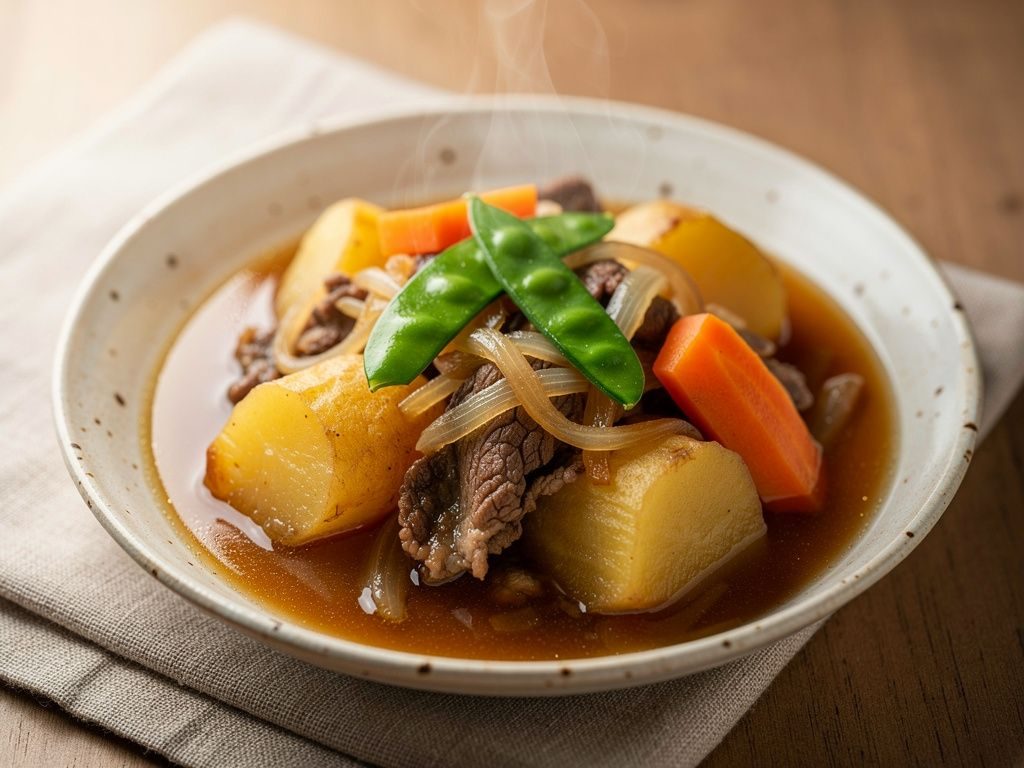
A homey Japanese stew of tender potatoes, sweet onions, and thin beef simmered in a lightly sweet soy-dashi broth. Nikujaga means meat and potatoes, and it is the epitome of Japanese comfort home cooking.
****+
Prep 20 min · Cook 30 min
Method
Prepare the vegetables: Peel and cut the potatoes and carrots into large bite-size chunks and cut the onion into wedges. Rinse the potato chunks in cold water to remove surface starch, which keeps the broth from turning cloudy.
Brown the beef: Heat the oil in a large pot over medium-high heat, add the beef, and stir-fry for 2 to 3 minutes just until it loses its pink color. Browning first builds a savory base for the stew.
Add the vegetables: Add the onion, carrots, and potatoes to the pot and stir for 2 minutes to coat them in the beefy oil. Add the shirataki noodles now too if you are using them.
Add the liquids: Pour in the dashi, then add the soy sauce, mirin, sake, and sugar. Stir gently and bring the pot to a simmer over medium heat.
Skim the broth: As it heats, skim off any foam that rises to the surface for a cleaner-tasting stew. This step keeps the broth clear and the flavor bright.
Add a drop lid: Cover the surface with a round of parchment paper or a drop lid (otoshibuta) that sits directly on the food. This traditional tool circulates the broth and helps everything cook and season evenly.
Simmer gently: Lower the heat to a gentle simmer and cook for 18 to 20 minutes, until the potatoes are fork-tender. Avoid stirring too much so the potatoes stay whole rather than breaking apart.
Reduce the liquid: Remove the drop lid and simmer for another 3 to 5 minutes to let the broth reduce and concentrate. There should be a shallow pool of glossy broth left in the pot.
Add the green vegetables: Stir in the snow peas or green beans and cook for a final 2 to 3 minutes until bright green and just tender. Adding them late keeps their color and crispness.
Rest before serving: Turn off the heat and let the stew rest for 5 to 10 minutes, which allows the flavors to soak deeper into the potatoes. Nikujaga tastes even better after this short rest.
Serve: Spoon the nikujaga into bowls, making sure each portion gets beef, potato, carrot, and broth. Serve warm alongside steamed rice and a bowl of miso soup for a classic home-style meal.
Chef's tips
- A drop lid (otoshibuta) or a circle of parchment laid right on the food is the secret to even simmering and deeply flavored potatoes.
- Resist over-stirring once the potatoes are in, since gentle handling keeps them intact instead of turning to mush.
- Nikujaga reheats beautifully and often tastes better the next day as the flavors continue to meld.
Cooking times vary by equipment -- cook to temperature and to taste.