Japanese · Free
Oyakodon (Chicken and Egg Rice Bowl)
A cozy one-pan classic of chicken and sweet onions simmered in a sweet-savory dashi broth, then bound with softly set egg and spooned over hot rice. Its name means parent and child, a nod to the chicken and egg cooked together.
****+
Prep 15 min · Cook 20 min
Method
Rinse and cook the rice: Rinse the rice under cold water, swirling with your hand and pouring off the cloudy water three or four times until it runs nearly clear. Cook it in a rice cooker or on the stovetop, then keep it warm and covered while you make the topping.
Prepare the dashi: Dashi is the foundational Japanese stock that gives dishes their gentle umami depth. For a quick version, dissolve 1 teaspoon of dashi powder in 3/4 cup of hot water; if you have homemade kombu-bonito dashi on hand, use that instead.
Build the simmering sauce: In a small skillet (about 8 to 9 inches works best for two servings), combine the dashi, soy sauce, mirin, sake, and sugar. Bring it to a gentle simmer over medium heat and stir until the sugar fully dissolves.
Add the onion: Scatter the sliced onion evenly into the simmering sauce and cook for 3 to 4 minutes until it softens and turns slightly translucent. The onion sweetens as it cooks and perfumes the broth.
Add the chicken: Lay the chicken pieces in a single layer over the onions and let them simmer for 5 to 6 minutes, turning once, until cooked through. The chicken is done when it reaches an internal temperature of 165 degrees F and shows no pink in the center.
Beat the eggs gently: In a bowl, beat the eggs just enough to break them up, leaving some streaks of white and yolk rather than a uniform mixture. This slightly uneven beating gives oyakodon its classic marbled look.
Pour in the first layer of egg: Raise the heat slightly so the broth bubbles, then pour about two-thirds of the beaten egg evenly over the chicken and onions. Do not stir; let it sit undisturbed for about 30 seconds so it begins to set.
Add the remaining egg: Drizzle the last third of the egg over the top and cover the pan with a lid. Cook for another 30 to 60 seconds until the egg is softly set but still glossy and slightly runny on top, which is the traditional texture.
Rest off the heat: Turn off the heat and let the pan sit, covered, for about 1 minute so the residual warmth gently finishes the egg. It should be silky, not dry.
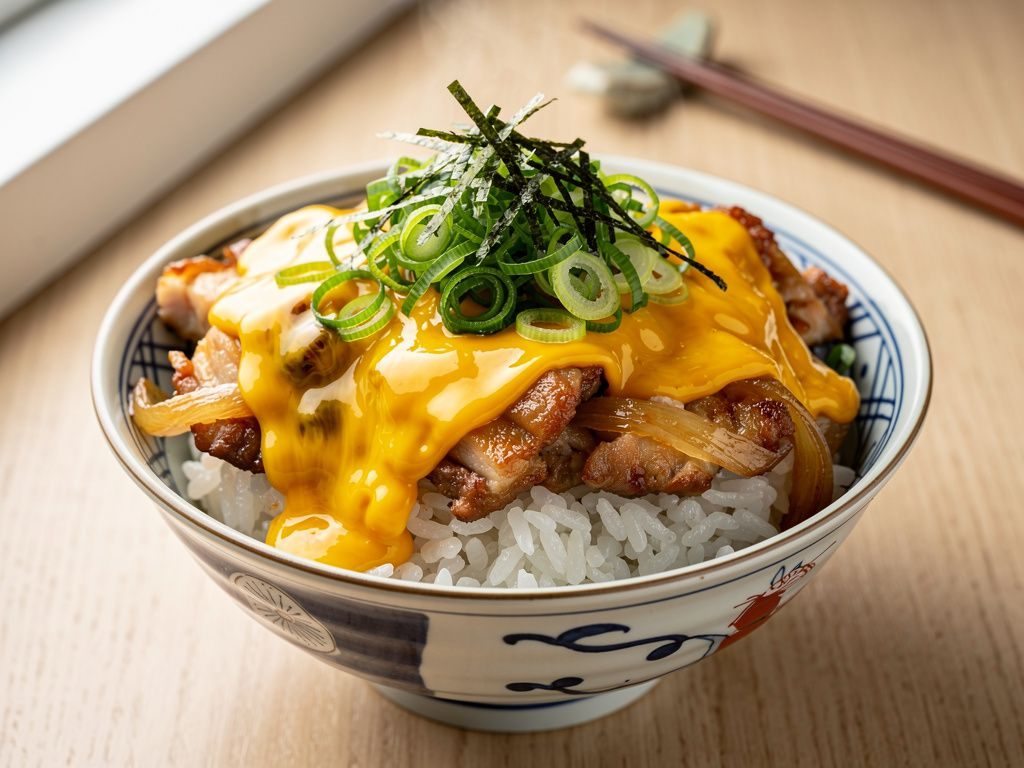
Assemble the bowls: Scoop the warm rice into two deep bowls. Carefully slide the chicken and egg topping out of the skillet and over the rice, keeping the layered shape as intact as you can.
Garnish and serve: Sprinkle the sliced scallions over the top and add a pinch of shichimi togarashi if you like a little heat. Serve immediately while the egg is warm and just set.
Chef's tips
- Use a small skillet so the sauce stays deep enough to poach the chicken and set the egg properly; a large pan spreads everything too thin.
- Do not overcook the egg -- pulling it off the heat while still slightly soft is the mark of authentic oyakodon.
- Chicken thighs stay juicier than breasts here, but if you use breast meat, cut the pieces a bit smaller and watch closely so they do not dry out.
Cooking times vary by equipment -- cook to temperature and to taste.